
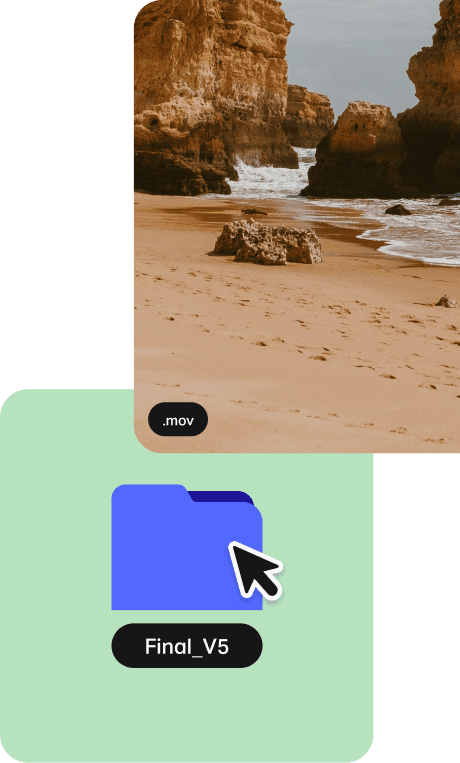

Collaborate on shared files without the inbox chaos
Government teams and NGOs deal with sensitive documents, tight review cycles, and contributors who often lack technical resources. WeTransfer lets recipients comment on individual files directly inside the browser preview, while you retain full control over transfer settings, access permissions, and descriptions after sending.
Collaborate on every transfer
Public sector and non-profit work often involves multiple stakeholders reviewing the same reports, briefings, or field materials, and coordinating feedback through email threads creates confusion about what changed and who responded. WeTransfer anchors every comment to the specific file it refers to, so a reviewer's note on a policy draft or a field officer's input on an image stays connected to the source rather than floating in a separate chain. Recipients can open transfers in the browser, leave comments on individual files, and mark favorites without downloading anything or creating an account, which removes friction for partners and beneficiaries operating with limited bandwidth or devices. You receive an email notification each time a comment is added, giving you a live picture of where the review stands. From the transfer detail page, you can update the title, revise the description, or adjust comment permissions at any time after sending, without re-uploading files.
What makes WeTransfer different
Our features are designed to minimize how much of your data we — or anyone else — can access, so you can keep what's yours, yours.
30M+ Transfers sent every month
4.8 App Store / Play Store average rating
12M+ Monthly active users
43K+ Enterprises using WeTransfer daily
Everything you need
Give people simple tools, and they'll do extraordinary things. Ultra-fast file transfers, built-in customization, easier team collaboration. That's the magic of WeTransfer.
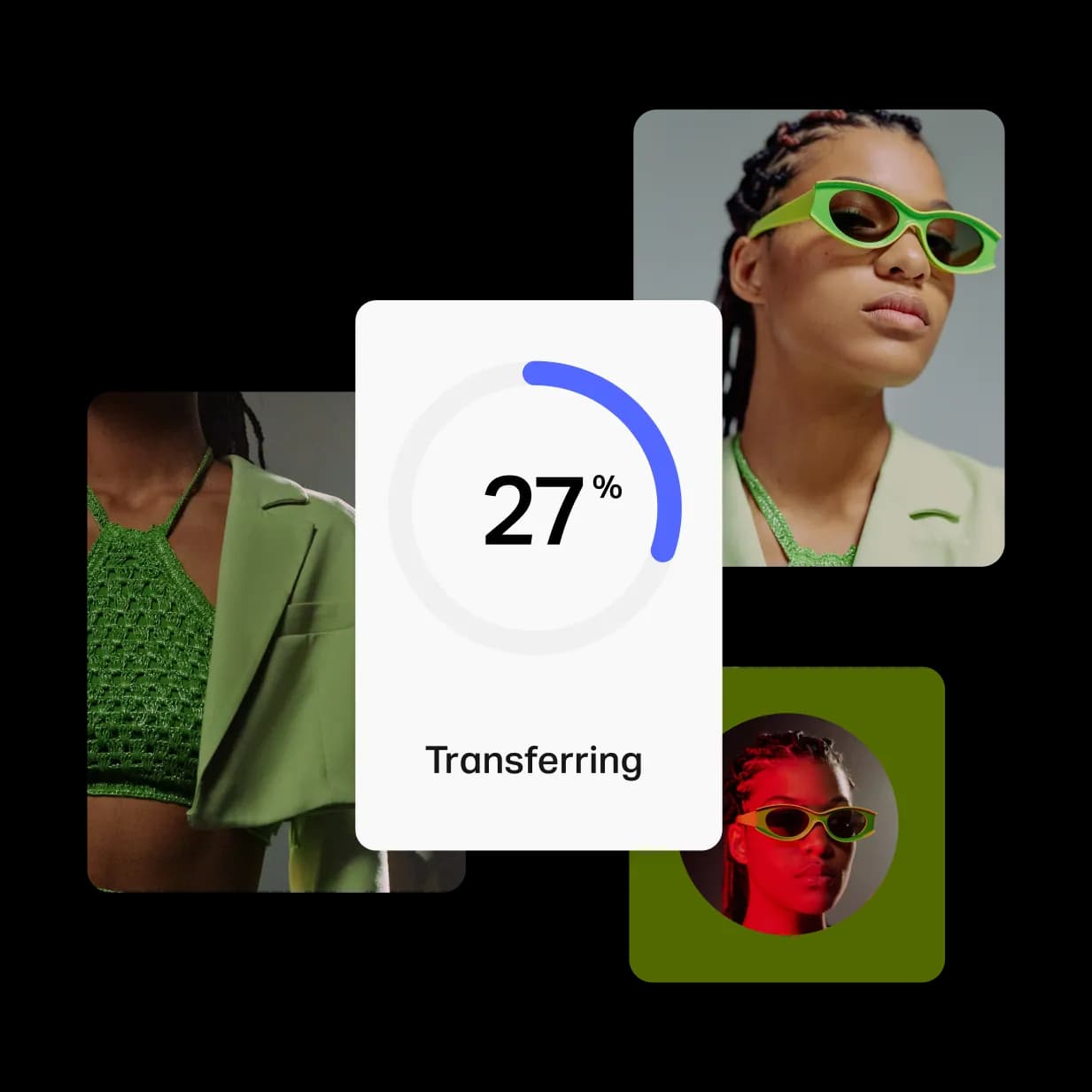
Move your ideas forward
Share content with a unique link, give anyone a free pass to send you 200 GB files, and stay in control of transfers — even after you hit send.
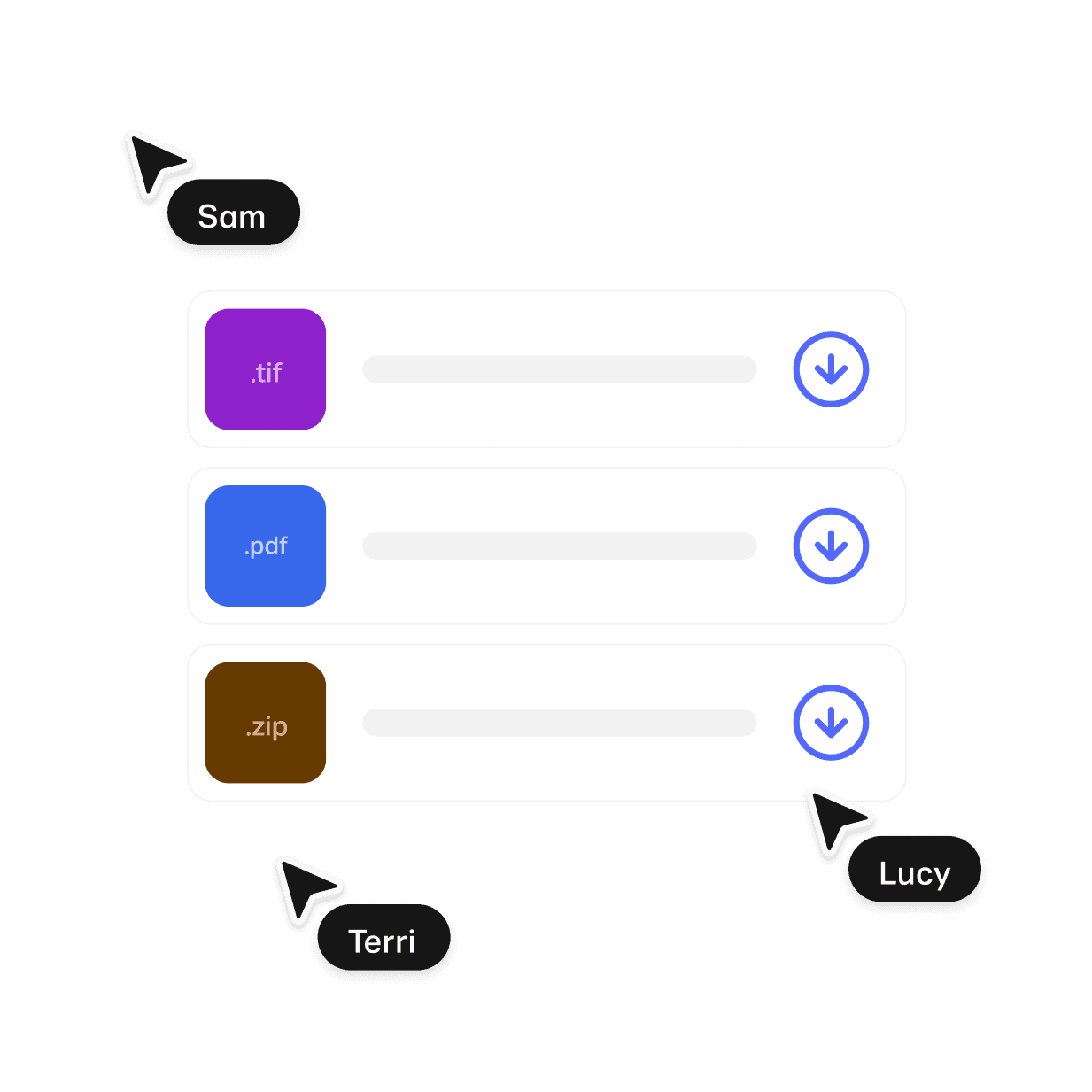
Collaboration tools for teams of all sizes
With tools designed to enhance collaboration, get everyone in your team talking and moving as one, without disrupting their workflow.
Share with confidence and security
From password protection to file encryption, WeTransfer has all the built-in security features you need to safeguard your work.
FAQs
All your questions answered.
Yes. Recipients can open a transfer, preview files in the browser, and leave comments on individual files without signing up for an account. They just enter their name and email address when commenting. This matters for government collaborators and NGO field contacts who may be working on shared or restricted devices.
WeTransfer supports in-browser previews for PDFs, images including JPEG, PNG, TIFF, and common RAW formats, MP4 and MOV video files, MP3 and WAV audio, as well as Word, Excel, and PowerPoint documents. That covers most of what moves between government departments, NGO headquarters, and external partners, from policy briefs and field reports to recorded site visits and presentation decks.
Go to your Transfers panel, open the relevant transfer, scroll to Extra settings, and expand the Comments section to change the setting. Disabling comments hides existing ones from viewers without deleting them, so you can re-enable them later and they will reappear. You can change this at any point after sending without re-uploading anything.
Yes. From the transfer detail page, you can rename a transfer or revise its description at any time after sending. This is useful when briefing materials go through versioning or when the subject of a review changes between sending and the review deadline, and it keeps your Transfers panel organized without creating duplicate uploads.
Two access control options are available on all plans. Password protection requires recipients to enter a password before downloading, and you share that password with them through a separate channel. Restricted access goes further, limiting the transfer to a specific list of email addresses, so only named individuals can open the files after verifying their email. Both can be set before sending or updated from the transfer detail page after sending.